Heat Pump Water Heaters: The Quiet Appliance Cutting Bills in Half
Heating water is one of the biggest energy uses in a home. A heat pump water heater does the same job with a fraction of the electricity, if your house suits it.

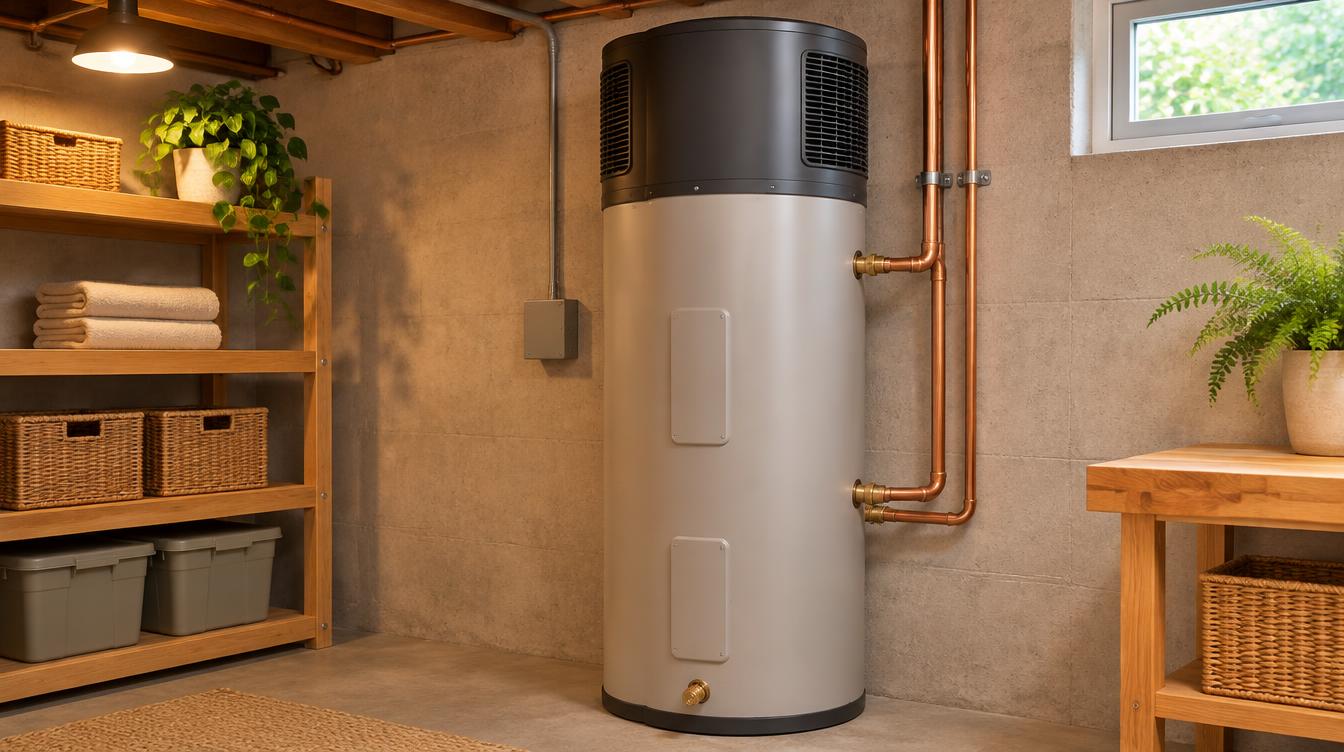
Nobody thinks about their water heater until the shower runs cold. It sits in a cupboard or a corner of the basement and quietly accounts for close to a fifth of a typical home's energy use.
That makes it one of the best places to save energy. The most efficient option available today is the heat pump water heater, and it works on a principle that sounds like a trick.
How it works
A conventional electric water heater works like a kettle. An element gets hot and the water around it warms up.
A heat pump water heater works like a refrigerator in reverse. It pulls heat out of the surrounding air and moves it into the tank. Moving heat takes much less electricity than making it.
The result is a unit that delivers three to four times as much heat as the electricity it consumes. A standard electric tank delivers slightly less than it consumes.
What that means for bills
Because it uses roughly a third of the electricity of a standard electric tank, a heat pump water heater can cut water heating costs dramatically. ENERGY STAR estimates savings of several hundred dollars a year for a family of four that replaces a standard electric model.
The saving compared with a gas water heater depends on local gas and electricity prices, and it varies from large to marginal.
It is the rare appliance that pays for its own price difference and then keeps paying.
Does your home suit one?
This is where heat pump water heaters differ from ordinary tanks. They need air to draw heat from, and that brings a few requirements.
- Space: typically around 700 to 1,000 cubic feet of surrounding air, or a ducted installation.
- Temperature: they work best where the air stays between about 40 and 90 degrees Fahrenheit.
- Height: the heat pump sits on top of the tank, so units are taller than standard ones.
- Drainage: they produce condensation, which needs a drain or a small pump.
- Power: most need a 240-volt circuit, though plug-in 120-volt models now exist.
A basement, garage or large utility room is ideal. A small sealed cupboard is not, unless it can be fitted with louvred doors or ducts.
The side effects
A heat pump water heater cools and dehumidifies the air around it. In a damp basement or a hot garage, that is a welcome bonus.
In a heated living space in a cold climate, it takes a little warmth from the room, which your heating system must then replace. Placement matters.
They also make noise, a steady hum similar to a dehumidifier. In a basement it goes unnoticed. Beside a bedroom wall it may not.
Hot water on demand
Heat pumps warm water more slowly than electric elements. To cope with heavy demand, almost all models are hybrids, with backup elements that switch on automatically when needed.
Choosing a slightly larger tank than you would otherwise buy lets the unit stay in its most efficient mode for more of the time.
| Household | Suggested tank size |
|---|---|
| 1 to 2 people | 40 to 50 gallons |
| 3 to 4 people | 50 to 65 gallons |
| 5 or more people | 65 to 80 gallons |
Operating modes
Most units offer several modes. Heat pump only is the most efficient and the slowest to recover. Hybrid balances efficiency and speed and is the sensible default.
High-demand mode leans on the electric elements for a houseful of guests. Vacation mode holds the tank at a low temperature while you are away.
What it costs
The appliance costs noticeably more than a standard electric tank, and installation can add to the difference if a new circuit, a drain or ducting is required.
Rebates from utilities and state programmes are widely available and can offset much of the premium. Check what applies in your area at the time of purchase, as these change often.
Installation points
If you are replacing an electric tank in the same spot, installation is often simple. Switching from gas involves capping the gas line and running a new electrical circuit, and it costs more.
Ask the installer to confirm the air volume, the condensate route and the clearance above the unit for servicing the filter.
Maintenance
There is one extra chore compared with a standard tank: rinsing the air filter every few months. It takes two minutes.
Otherwise the usual advice applies. Flush sediment from the tank once a year and have the anode checked every few years.
Who should buy one
If you heat water with electricity, have a suitable space and plan to stay in your home for more than a few years, a heat pump water heater is among the most reliable energy savings available.
If your only location is a small interior cupboard, or you have inexpensive gas, the case is weaker and worth pricing carefully.
For everyone else, it is a rare upgrade: lower bills, the same hot showers and almost nothing to think about afterwards.