Home Solar in Plain Numbers: How to Size a System From Your Electric Bill
Before you ask for a single quote, ten minutes with last year's bills will tell you roughly how many panels you need and whether your roof can hold them.

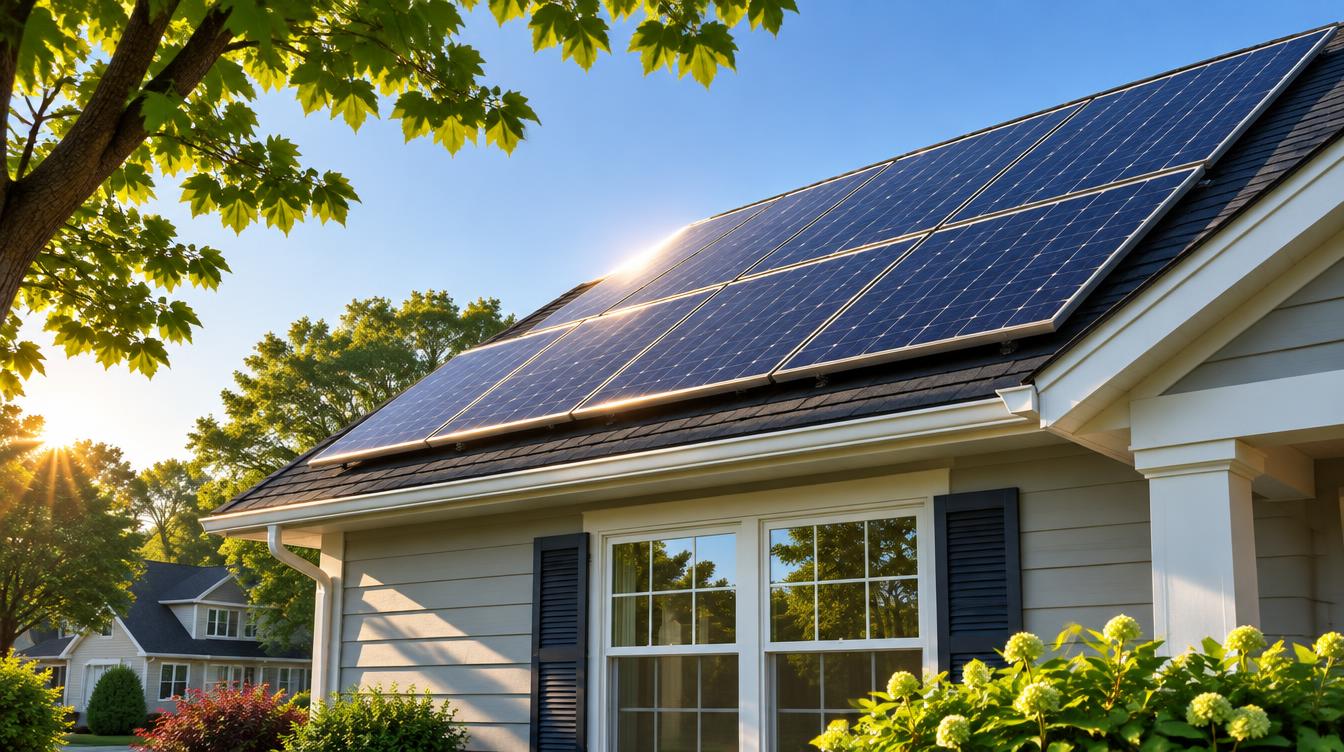
Most people meet home solar for the first time through a sales proposal. It arrives with a system size, a panel count and a price, and very little explanation of where any of those numbers came from.
You can work them out yourself. The arithmetic is simple, and doing it first changes the conversation with every installer you speak to.
Step one: find your annual use
Gather twelve months of electricity bills and add up the kilowatt-hours. Many utilities show a yearly total, or a bar chart of the past year, on each statement.
For reference, a typical American household uses somewhere around 10,500 kilowatt-hours a year. Homes with electric heating, a pool or an electric car can use far more. Efficient homes in mild climates use far less.
Use a full year rather than a single month. Air conditioning and heating swing consumption widely from season to season, and solar production swings too.
Step two: find your sun hours
Solar output depends on peak sun hours, a measure of how much strong sunlight a location receives on an average day. It is not the same as hours of daylight.
Most of the United States falls between three and a half and six and a half peak sun hours. The Southwest sits at the top of that range, and the Pacific Northwest and parts of the Northeast near the bottom.
Step three: do the sum
Divide your annual use by the number of sun hours in a year, then allow for real-world losses from heat, wiring, dust and the inverter. A common allowance is around 20 to 25 percent.
For a home using 10,500 kilowatt-hours a year with 4.5 peak sun hours a day, the sum is 10,500 divided by 4.5, divided by 365, divided by 0.78. The answer is a little over 8 kilowatts.
If you can read an electricity bill and divide, you can check a solar quote.
Step four: turn kilowatts into panels
Residential panels today are commonly rated at around 400 watts each. An 8.2 kilowatt system therefore needs about 21 of them.
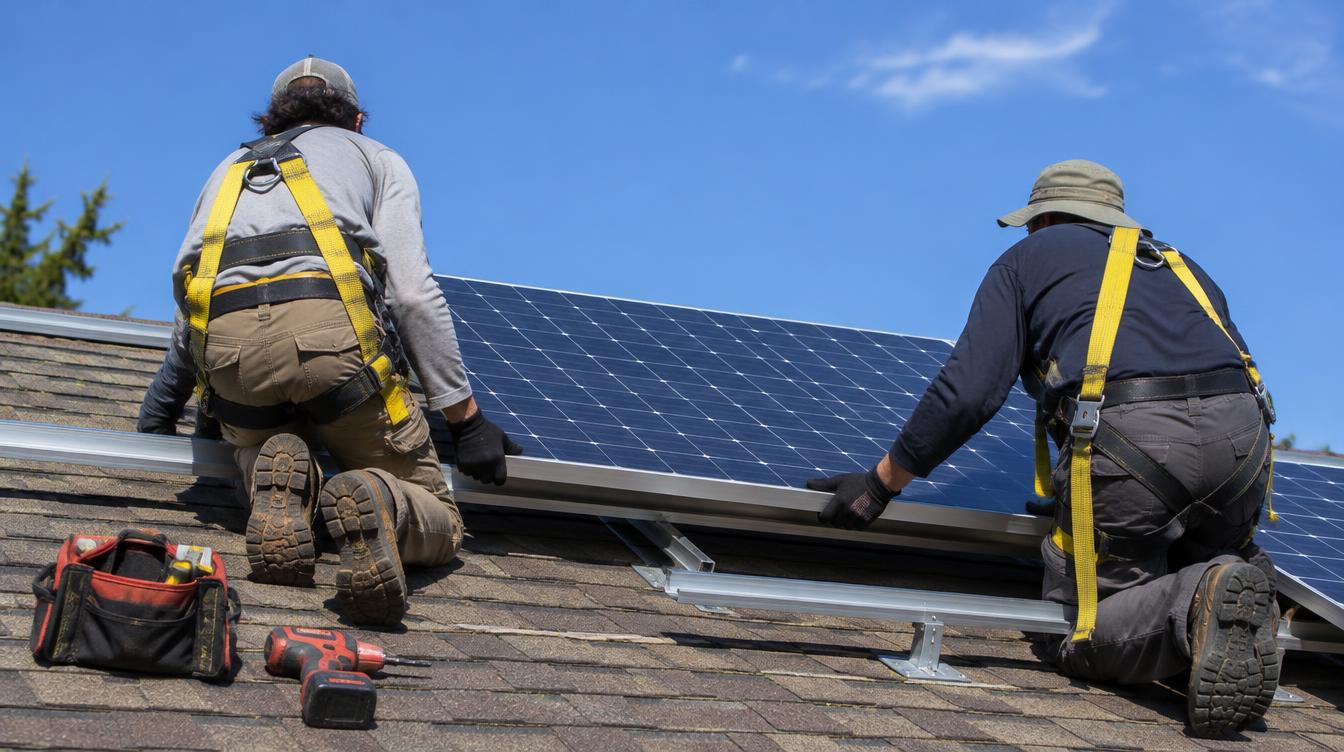
Each panel covers roughly 17 to 18 square feet. Twenty-one panels need in the region of 370 square feet of suitable roof, plus clearances required by local fire codes.
| Annual use | 3.5 sun hours | 4.5 sun hours | 5.5 sun hours |
|---|---|---|---|
| 6,000 kWh | 6.0 kW, 15 panels | 4.7 kW, 12 panels | 3.8 kW, 10 panels |
| 10,500 kWh | 10.5 kW, 27 panels | 8.2 kW, 21 panels | 6.7 kW, 17 panels |
| 15,000 kWh | 15.1 kW, 38 panels | 11.7 kW, 30 panels | 9.6 kW, 24 panels |
These figures assume 400 watt panels and typical system losses. Treat them as a guide for checking quotes rather than a design.
Does your roof suit it?
In the northern hemisphere, a south-facing roof produces the most over a year. East and west faces still work well, typically yielding around 10 to 20 percent less. North-facing slopes are usually not worth covering.
Shade matters more than most people expect. A chimney, a dormer or a neighbour's tree that shades part of the array for a few hours can cut output noticeably.
- Note which roof faces get sun from mid-morning to mid-afternoon.
- Look for shade in winter, when the sun is low, as well as in summer.
- Check the age of the roof. Panels last 25 years or more.
- Ask about the electrical panel, which may need upgrading.
If the roof covering has less than about ten years of life left, replacing it before the panels go on is usually cheaper than removing and refitting them later.
Should you cover all of your use?
Not necessarily. The right size depends on how your utility credits surplus power sent to the grid, a policy usually called net metering or net billing.
Where exports are credited at the full retail rate, sizing the system to match your annual use makes sense. Where exports earn much less, a smaller system that you mostly consume yourself, or one paired with a battery, can give a better return.
These rules vary by state and by utility, and they change. Read your utility's current policy before settling on a size.
Comparing quotes fairly
Ask at least three installers for proposals, and compare them on price per watt: the total price divided by the system size in watts. It is the only figure that lets you compare a 7 kilowatt quote with a 9 kilowatt one.
Check the estimated first-year production in kilowatt-hours as well. A quote that promises far more output than your own sum suggests may be optimistic about shading.
Equipment in brief
Panels from established manufacturers are broadly similar in performance and typically carry 25-year warranties. Output declines slowly, often by around half a percent a year.
The inverter converts the panels' output into household electricity. Systems with a small inverter or optimiser on each panel cope better with partial shade. A single central inverter is simpler and usually costs less.
What solar will not do
A standard grid-connected system shuts down during a power cut, for the safety of line workers. To keep the lights on, you need a battery or a specially equipped inverter.
Solar will not eliminate your bill entirely either. Most utilities charge a fixed monthly connection fee regardless of how much you generate.
Before you sign
Run your own numbers, confirm your utility's export rules and collect several quotes. Incentives and tax rules change frequently, so verify what applies on the date you buy, and take independent advice on anything involving finance.
The sun is reliable. The paperwork deserves a careful read.