Home Batteries: Backup, Savings or Both?
A home battery can keep the fridge running through a storm or shift cheap solar into the evening. Decide which job you are buying it for before you look at sizes.

Home batteries have moved from a niche product to a standard line on solar quotes in just a few years. They are also the most expensive single component in a typical system, which makes it worth understanding exactly what you would be paying for.
A battery can do two jobs. Most households care much more about one than the other, and that preference should drive the whole decision.
Job one: backup
When the grid goes down, a battery with the right switching equipment disconnects your home and powers it independently. The changeover takes a fraction of a second, and many people do not notice it happen.
How long it lasts depends on what you ask it to run. The same battery might carry lights, the fridge and internet for two days, or central air conditioning for a few hours.
Job two: shifting energy
Solar panels produce most at midday, when many homes use least. A battery stores that surplus and releases it in the evening.
This matters most where the utility pays little for exported power or charges more for electricity at peak times. Where exports are credited at the full retail rate, the financial case for a battery is much weaker.
A battery is insurance first and an investment second. Know which one you are buying.
Two numbers to understand
Capacity, measured in kilowatt-hours, is how much energy the battery holds. Think of it as the size of the tank. Common home units hold roughly 10 to 15 kilowatt-hours of usable energy.
Power, measured in kilowatts, is how much it can deliver at once. Think of it as the width of the pipe. It decides which appliances you can run at the same time.
A battery with plenty of capacity but modest power can run a fridge for days and still be unable to start a large air conditioner.
Essential loads or whole home
Most backup systems power a selected set of circuits rather than the entire house. An electrician moves those circuits to a separate panel that the battery feeds during an outage.
- Refrigerator and freezer.
- Lighting in the main rooms.
- Internet, phone chargers and a few outlets.
- Furnace fan or boiler controls.
- Medical equipment, a well pump or a sump pump, if you have them.
Whole-home backup is possible, but it generally needs more than one battery, particularly in homes with electric heating, cooling or cooking.
How long will it last?
Add up the daily use of the things you want to keep running and divide the battery's usable capacity by that figure.
A 13 kilowatt-hour battery running 6 kilowatt-hours of essentials a day lasts about two days. With solar panels recharging it each morning, it can continue for as long as the sun cooperates.
| Scenario | Daily load | 13 kWh battery lasts |
|---|---|---|
| Fridge, lights, internet | About 5 kWh | Around 2.5 days |
| Essentials plus furnace fan | About 8 kWh | Around 1.5 days |
| Essentials plus central air | About 25 kWh | Roughly half a day |
Battery or generator?
A standby generator runs for as long as it has fuel, which makes it the stronger choice for long outages and for homes with large electrical loads.
A battery is silent, needs almost no maintenance, switches over instantly and can earn its keep on ordinary days. In areas where outages are short and frequent, it is often the more pleasant solution.
Some households combine a modest battery with a small portable generator for extended emergencies.
Chemistry and lifespan
Most new home batteries use lithium iron phosphate cells, which tolerate daily cycling well. Warranties commonly run for ten years and guarantee a minimum remaining capacity at the end.
Read the warranty for the conditions attached, including limits on the number of cycles and any requirement to keep the unit connected to the internet.
Where it goes
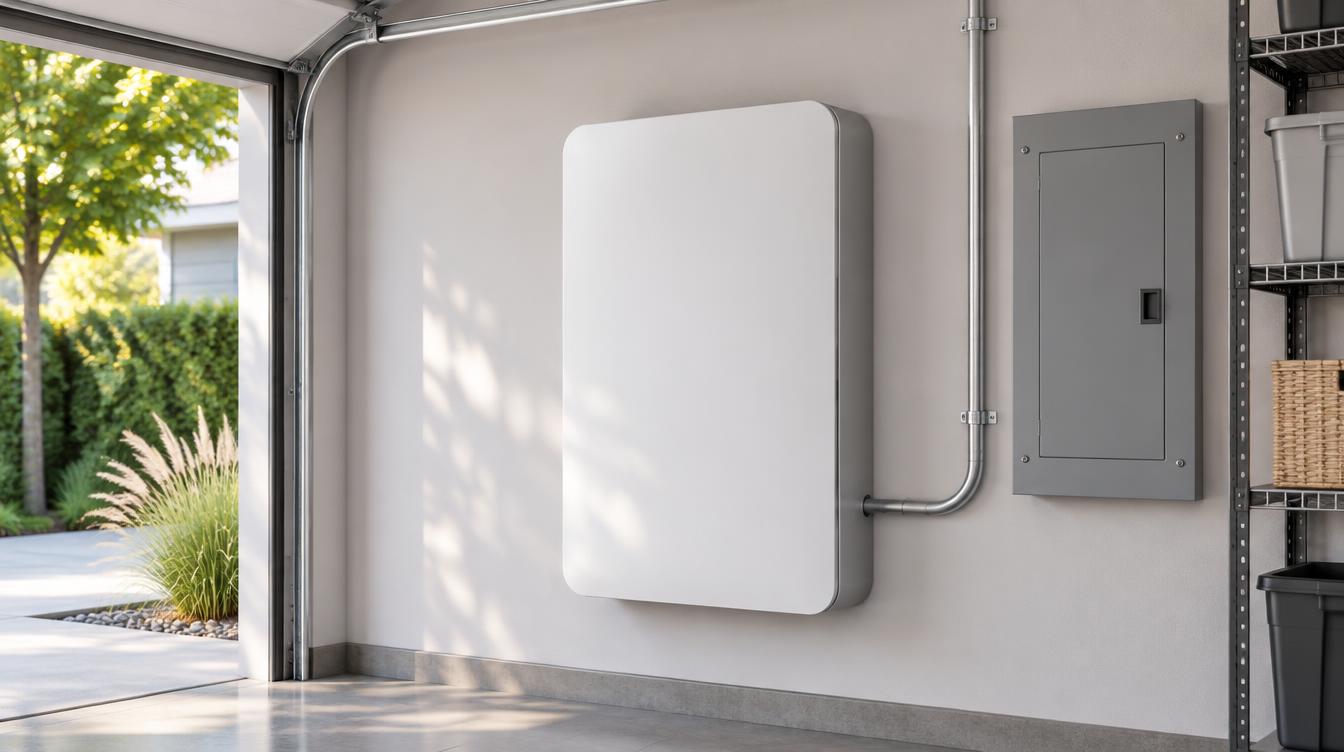
Batteries are usually mounted on a garage or exterior wall. They work best at moderate temperatures, and local codes set rules on clearances and placement.
Ask the installer where the unit will go and whether your main electrical panel needs changes. These details affect the price more than the battery itself does.
Do you need one?
If outages are rare and your utility credits solar exports generously, a battery is hard to justify on savings alone. Leave space for one and add it later.
If you lose power several times a year, depend on a well pump or medical equipment, or pay much more for evening electricity, a battery can be worth every dollar.
The sensible order
Reduce your consumption first, size the solar second and decide on storage third. A more efficient home needs a smaller battery, and smaller batteries cost less.
Whatever you choose, make sure the proposal states clearly what the system will and will not run when the grid is down.